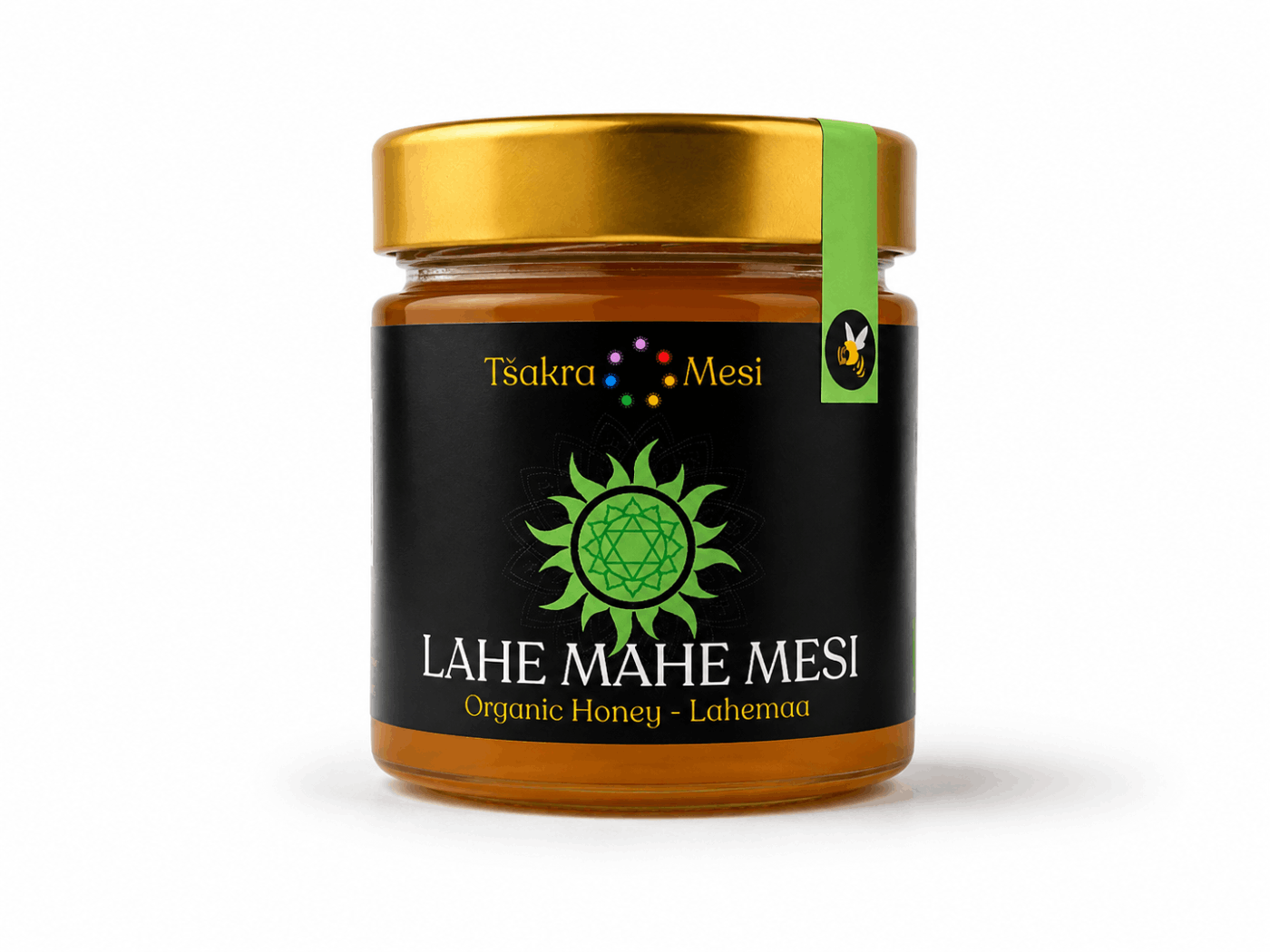
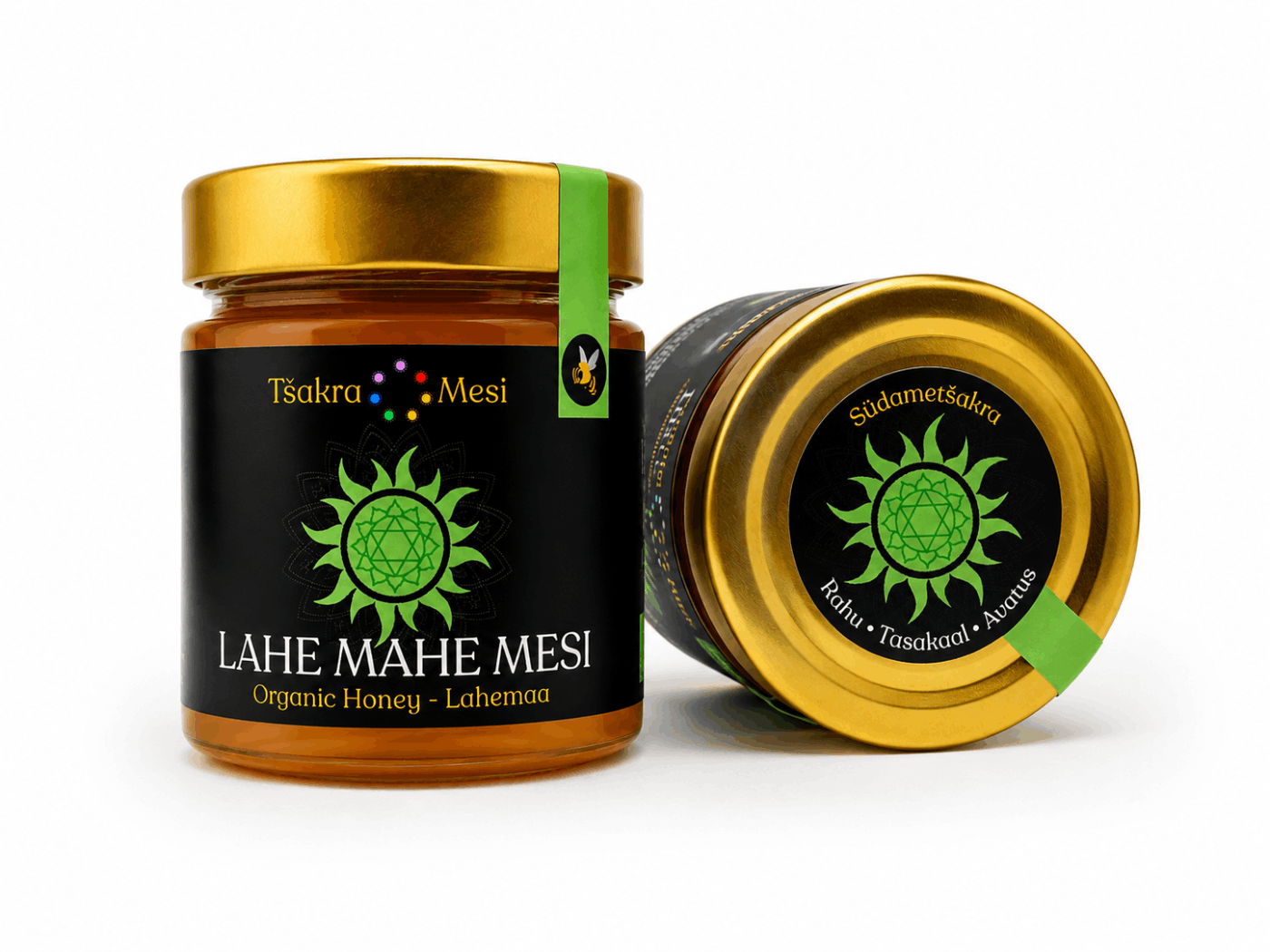
Lahemaa organic honey – origin and properties
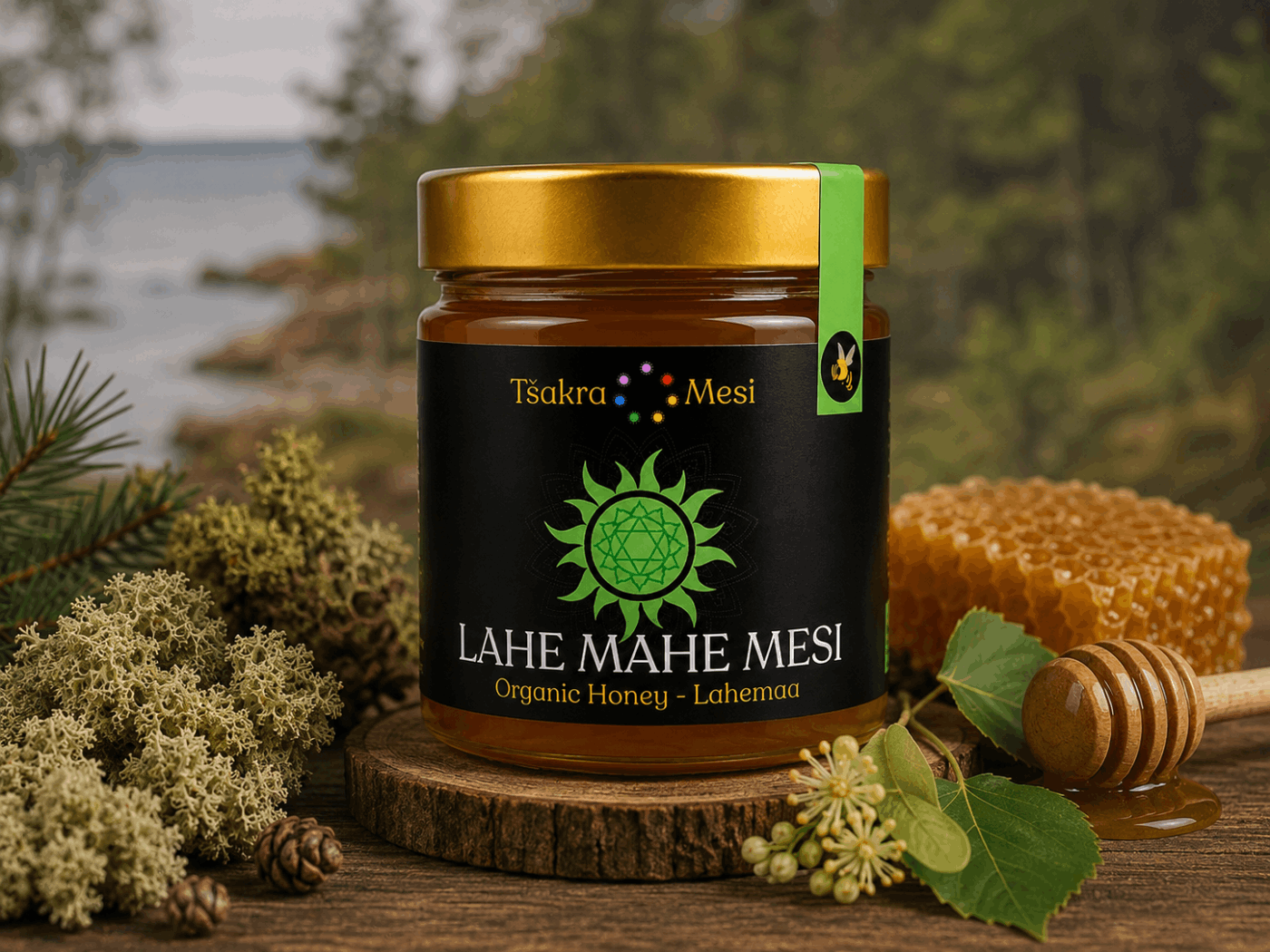
The nectar is harvested from meadow and forest plants in spring and summer in the forests of Lahemaa National Park and Hara Bog. In the natural environment of the ancient forest and bog with its diverse vegetation, bees can collect nectar from a variety of plants, which develops into honey in the hive. Most of the forage plants are recognized medicinal plants, such as raspberry, blueberry, cranberry, lingonberry, cloudberry, fireweed, and others. In addition, there is an area of wild linden trees approximately 1 km away. Organic Lahe Honey is produced honestly and purely in an organic harvesting area. It is traceable, unfiltered raw honey, with each batch having its own unique memory.
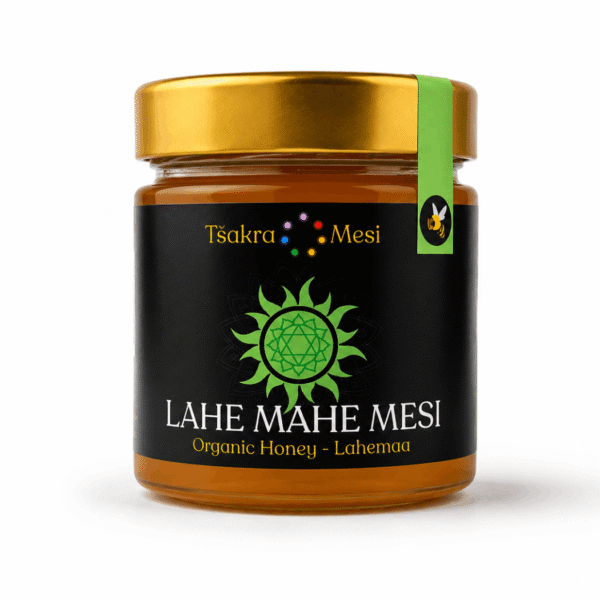
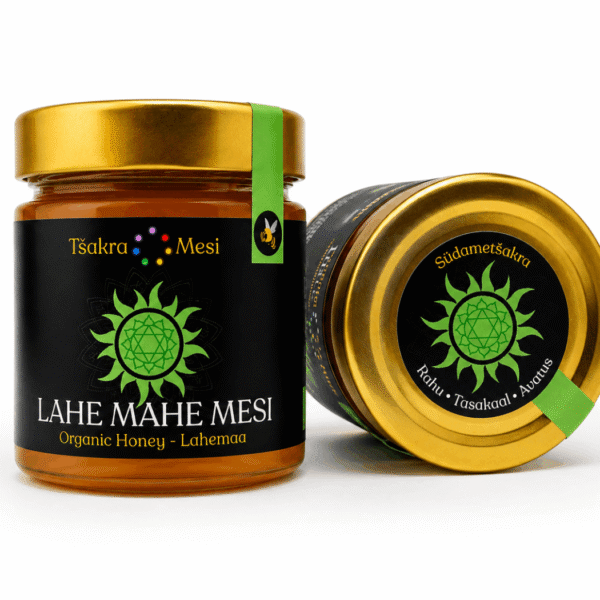
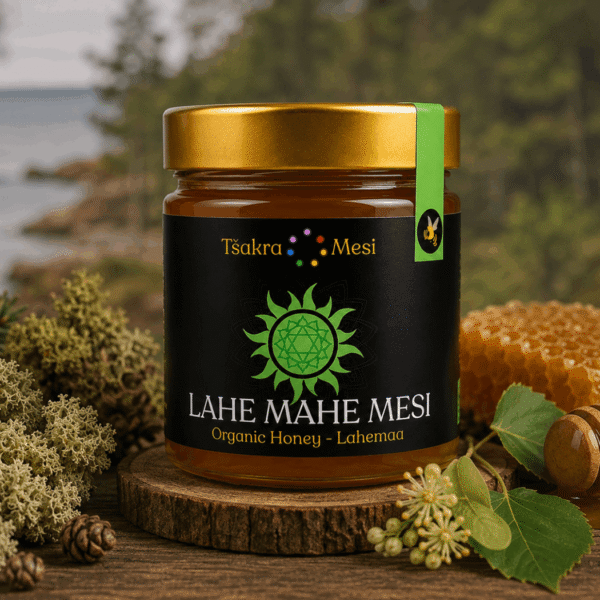
Product name: Organic Lahe Honey – Lahemaa Origin: Hara Bog, Lahemaa Season: spring–summer
Properties:
- Plants: Willow, ground elder, nettle, linden, raspberry, blueberry, cloudberry, lingonberry, cranberry, fireweed, heather, and other flowering plants
- Color: Spring honey is golden, while summer honey has a darker hue
- Taste: Varies depending on the plants. Linden nectar is also clearly noticeable and may account for approximately 30%.
- Aroma: Pleasantly sweet, natural aroma; depending on the plants, it may contain various stronger nuances
- Texture: Spring honey is softer, with smaller crystals, and crystallizes more quickly. Summer honey crystallizes over a longer period but ultimately remains soft enough for a spoon to be easily inserted at any time.
- Use: At least 1 spoonful every day for restorative nourishment and a quick source of pure energy; if desired, add 1–2 spoonfuls to coffee or tea. Store below +20°C.
- 1 jar contains: 250 g of honey
- Storage conditions: according to the instructions on the product label
- Best before: batch-specific, marked on each jar
Organic honey differs from “conventional honey” primarily in terms of the selected harvesting area. Organic bee colonies are placed so that there are no “conventional fields” within a 3 km flight radius where they could come into contact with plant protection products. There are also requirements concerning honey traceability, beeswax, hive materials, treatments, supplementary feeding, record-keeping, etc. Inspectors from the Agriculture and Food Board carry out inspections 2–3 times a year.