
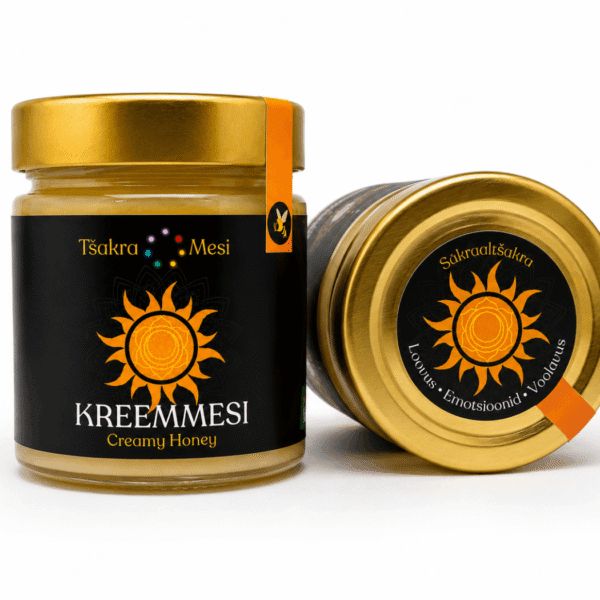

Creamed honey – properties and origin
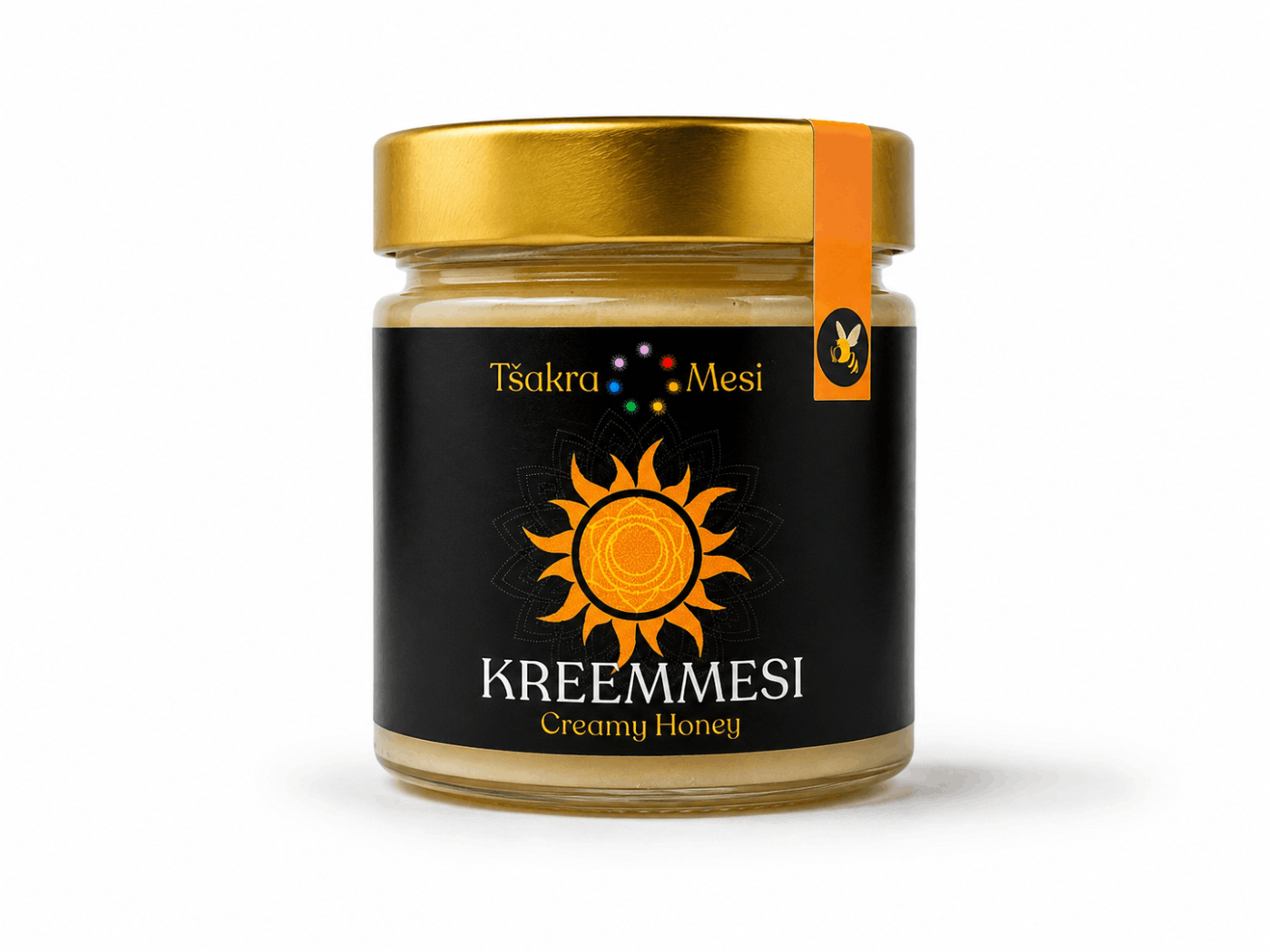
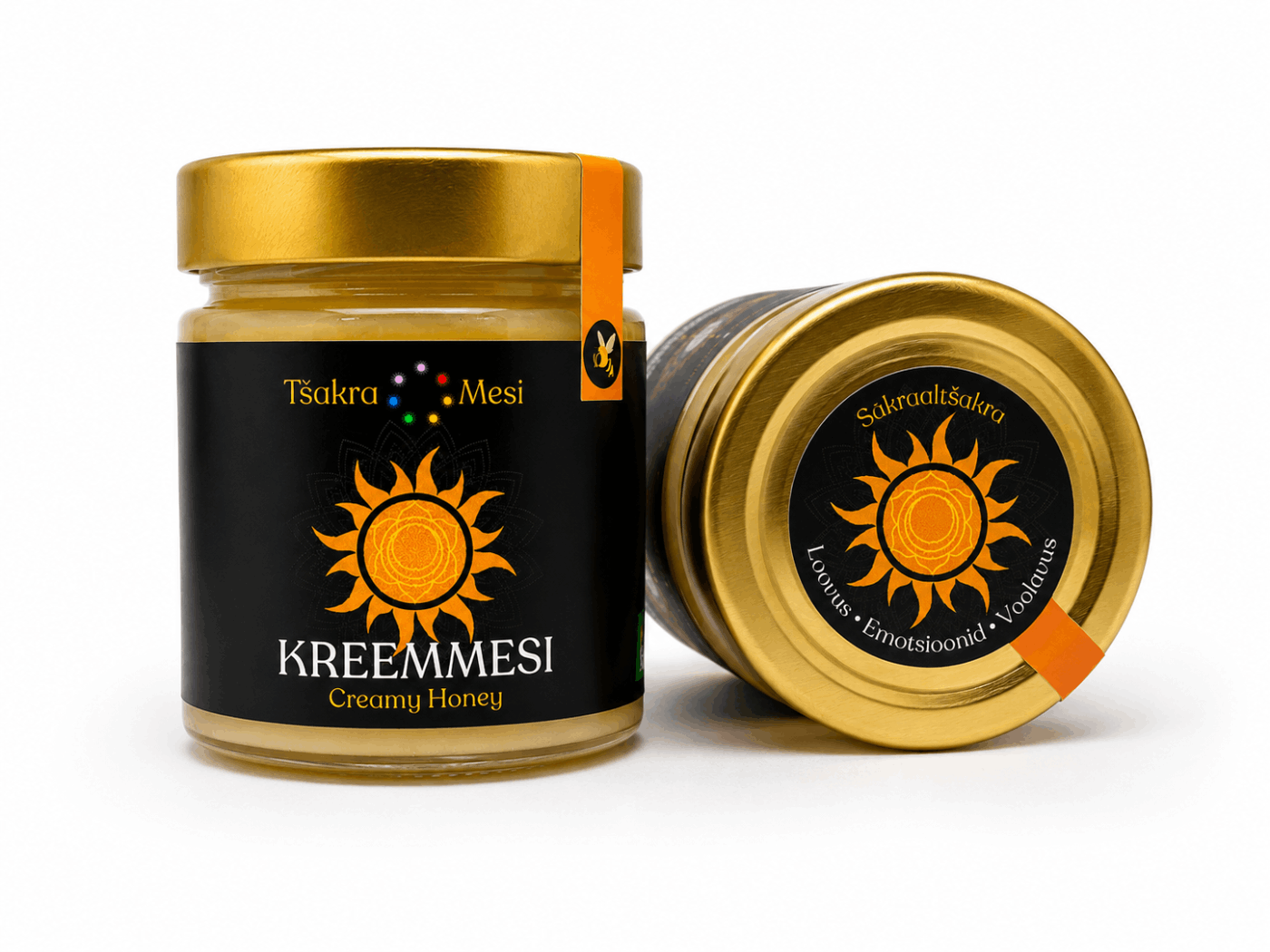
The nectar is harvested in spring and summer from meadow, field, and forest plants in Tartu County. The honey crystallizes into a fine-grained, creamy consistency, which is achieved by stirring it regularly during crystallization. This gives the honey a smooth, soft, and creamy texture.
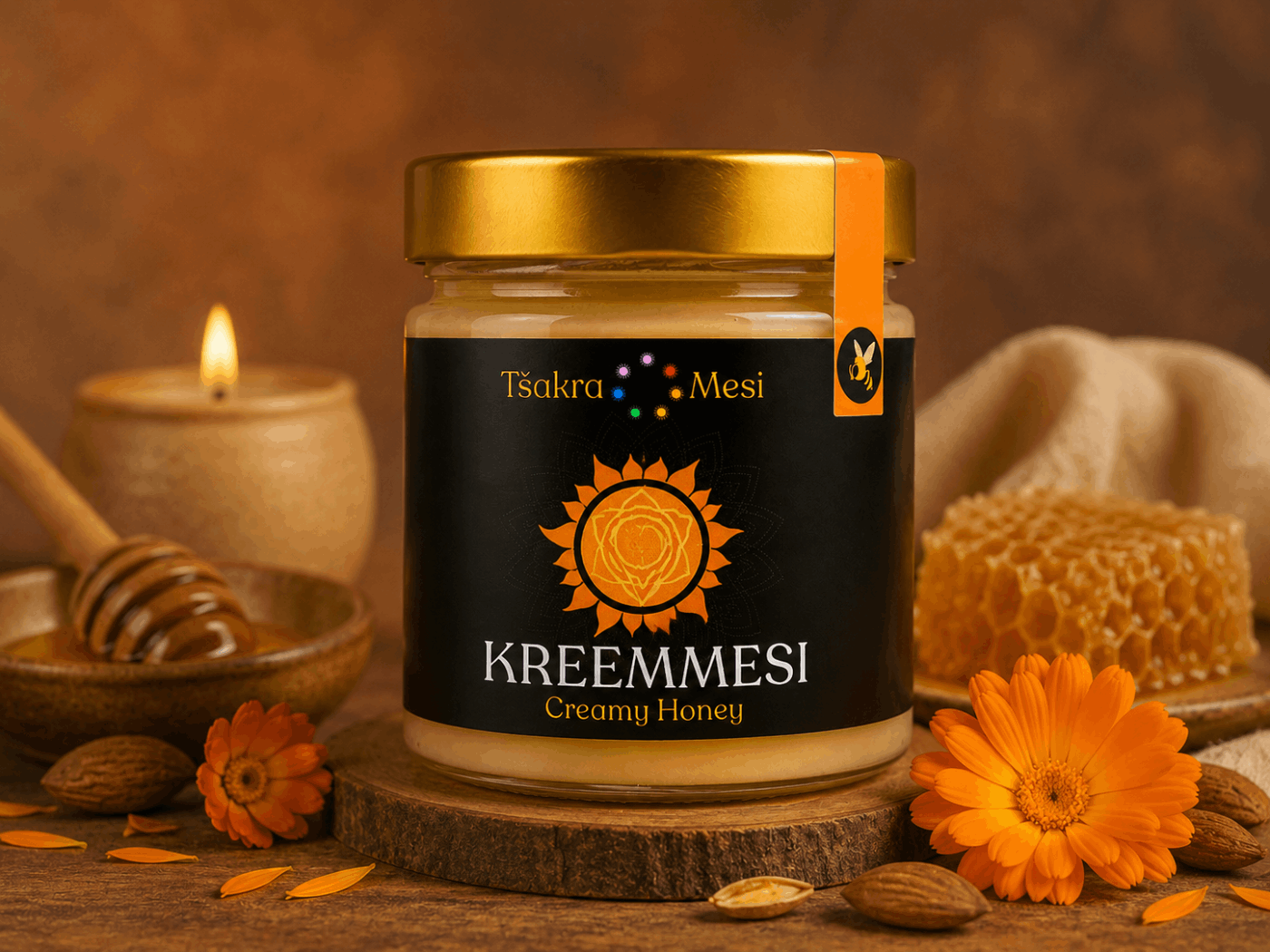
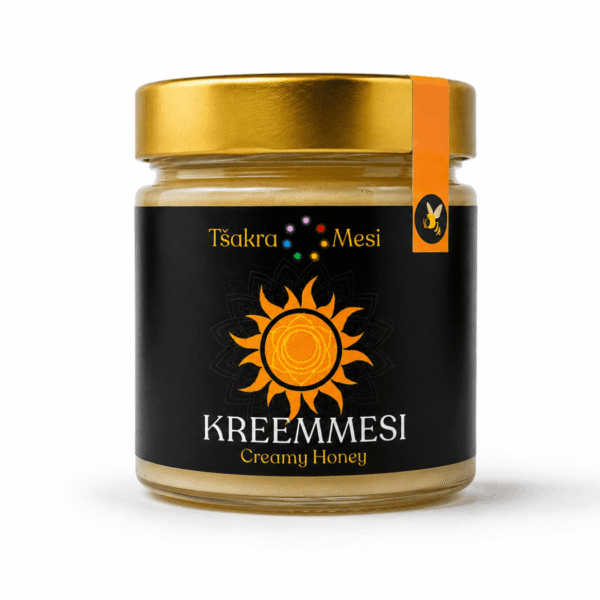
Creamed honey is also known as spreadable honey because its soft texture and light color resemble butter. It is popular in many European countries and is valued especially for its pleasant spreadability and long-lasting texture.
Origin: Tartu County Season: Spring
Properties / Product information
- Plants: Willow, coltsfoot, maple, dandelion, fruit trees, berry bushes, clover, ground elder, nettle, raspberry, white mustard, and other flowering plants
- Color: Spring honey is light yellow
- Taste: Varies depending on the plants. Spring honey is more floral and sweeter
- Aroma: Pleasantly sweet, natural aroma; depending on the plants, it may contain different nuances
- Texture: soft, with fine crystals
- Use: At least 1 spoonful every day for enjoyment, restorative nourishment, and a quick source of energy; if desired, add 1–2 spoonfuls to coffee or tea. It is also used as sauna and massage honey. Easy to use and spread on bread because it does not drip.
- 1 jar contains: 250 g of honey
- Storage conditions: according to the instructions on the product label
- Best before: batch-specific, marked on each jar
Additional information: The honey is produced honestly and purely. It is traceable, unfiltered raw honey that has been slowly stirred for a short period to create creamed honey. Creamed honey is always soft, silky, and velvety. It retains the natural properties of honey. At temperatures above +20°C, it may begin to separate!